

The UEFA Champions League, formerly known as the European Cup, is the most prestigious club football competition in the world. Since its inception in 1955, the tournament has witnessed legendary moments, iconic clubs, and unforgettable players. Let’s take a closer look at the remarkable journey of the Champions League.
The UEFA Champions League, commonly referred to as the European Cup or simply the Champions League, is the pinnacle of European club football. Organized by UEFA, the tournament began in 1955 as the European Champion Clubs’ Cup and has since evolved into a global sporting phenomenon, drawing millions of viewers every season.
Origins of the European Cup
The idea for a continental competition came from Gabriel Hanot, editor of the French newspaper L’Équipe. After Wolverhampton Wanderers proclaimed themselves “world champions” following a friendly victory over Budapest Honvéd in the 1950s, Hanot proposed an official tournament to crown Europe’s best team. UEFA adopted the idea in 1955 in Paris, and the European Cup was born.
The inaugural season (1955–56) featured 16 clubs, including Real Madrid (Spain), AC Milan (Italy), Anderlecht (Belgium), and Sporting CP (Portugal). The very first match took place on September 4, 1955, between Sporting CP and Partizan Belgrade, ending in a 3–3 draw. João Baptista Martins of Sporting scored the competition’s first goal. Real Madrid won the first title, beating Stade de Reims 4–3 in the final at the Parc des Princes.
Initially, the European Cup was reserved for domestic league champions and the defending champion, with a straight knockout format played over two legs, creating intense and dramatic encounters.
Real Madrid’s Early Dominance
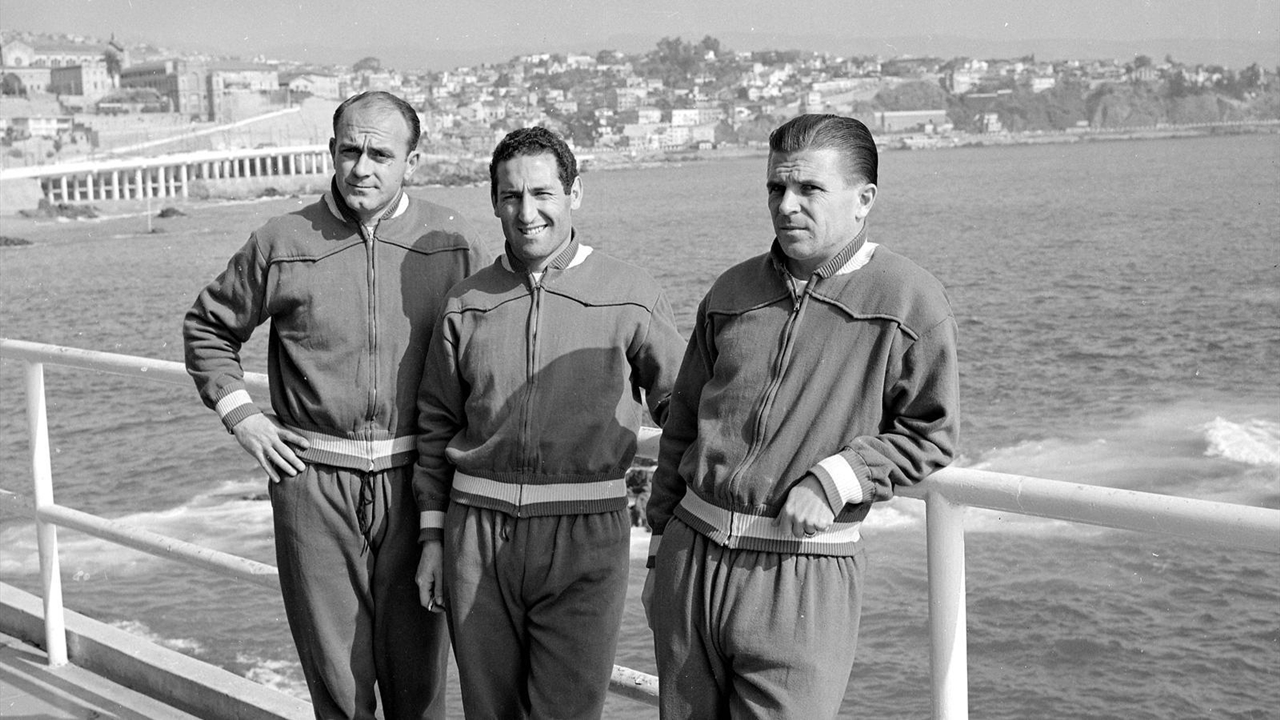
Between 1955 and 1960, Real Madrid completely dominated, winning the first five editions with legends like Alfredo Di Stéfano, Ferenc Puskás, and Francisco Gento. The pinnacle came in 1960 when they demolished Eintracht Frankfurt 7–3 in front of 127,000 fans at Hampden Park, one of the most iconic finals in history.
The 1960s then saw a shift, with Benfica (1961, 1962), AC Milan (1963), Inter Milan (1964, 1965), and Celtic (1967) all lifting the trophy. Celtic’s 1967 triumph was historic—they became the first non-Southern European team to win the cup, defeating Inter Milan 2–1 in a final remembered as the triumph of the “Lisbon Lions.”
Transformation into the UEFA Champions League
In 1991, UEFA introduced a group stage, replacing the pure knockout system. A year later, in 1992, the tournament was rebranded as the UEFA Champions League, marking a new era of commercial growth and sporting evolution. The competition was expanded to include not just national champions but also top-ranked runners-up, third-place, and even fourth-place finishers from elite leagues, dramatically increasing competitiveness and global appeal.
Another defining change was the introduction of the Champions League anthem, composed by Tony Britten in 1992, inspired by George Frideric Handel’s Zadok the Priest. Performed by the Royal Philharmonic Orchestra, the anthem has become synonymous with the competition, stirring emotions whenever it is played.
Eras of Dominance and Records
Over the decades, different footballing nations and clubs have enjoyed periods of dominance:
- 1970s–1980s: English clubs ruled, with Liverpool, Nottingham Forest, and Aston Villa all lifting the trophy. Liverpool alone won four titles (1977, 1978, 1981, 1984).
- 1990s: Italian teams, especially AC Milan, thrived, with Milan claiming three European crowns (1989, 1990, 1994). Borussia Dortmund’s 1997 triumph was the last before the competition opened to non-champions.
- 2000s–2010s: Spanish and English clubs battled for supremacy. Pep Guardiola’s Barcelona dazzled with victories in 2009 and 2011, while Manchester United triumphed in 2008. Real Madrid returned with a 2002 win, highlighted by Zinedine Zidane’s legendary volley.
- 2014–2018: Real Madrid dominated again, winning four titles in five years—including an unprecedented three in a row (2016, 2017, 2018) under Zidane.
As of 2025, Real Madrid holds a record 15 titles, followed by AC Milan (7), while Liverpool and Bayern Munich each have 6. Spain leads with 20 wins, followed by England (15) and Italy (12). England also boasts the most different winning clubs (6).
Modern Competition Format
Starting from the 2024–25 season, the Champions League adopted the Swiss system, replacing the traditional group stage. Under this format, 36 teams compete, each playing eight matches (four home, four away). The top 24 advance: the top eight directly to the Round of 16, while places 9–24 contest play-offs. The knockout stage then proceeds as usual, with the final held in late May or early June.
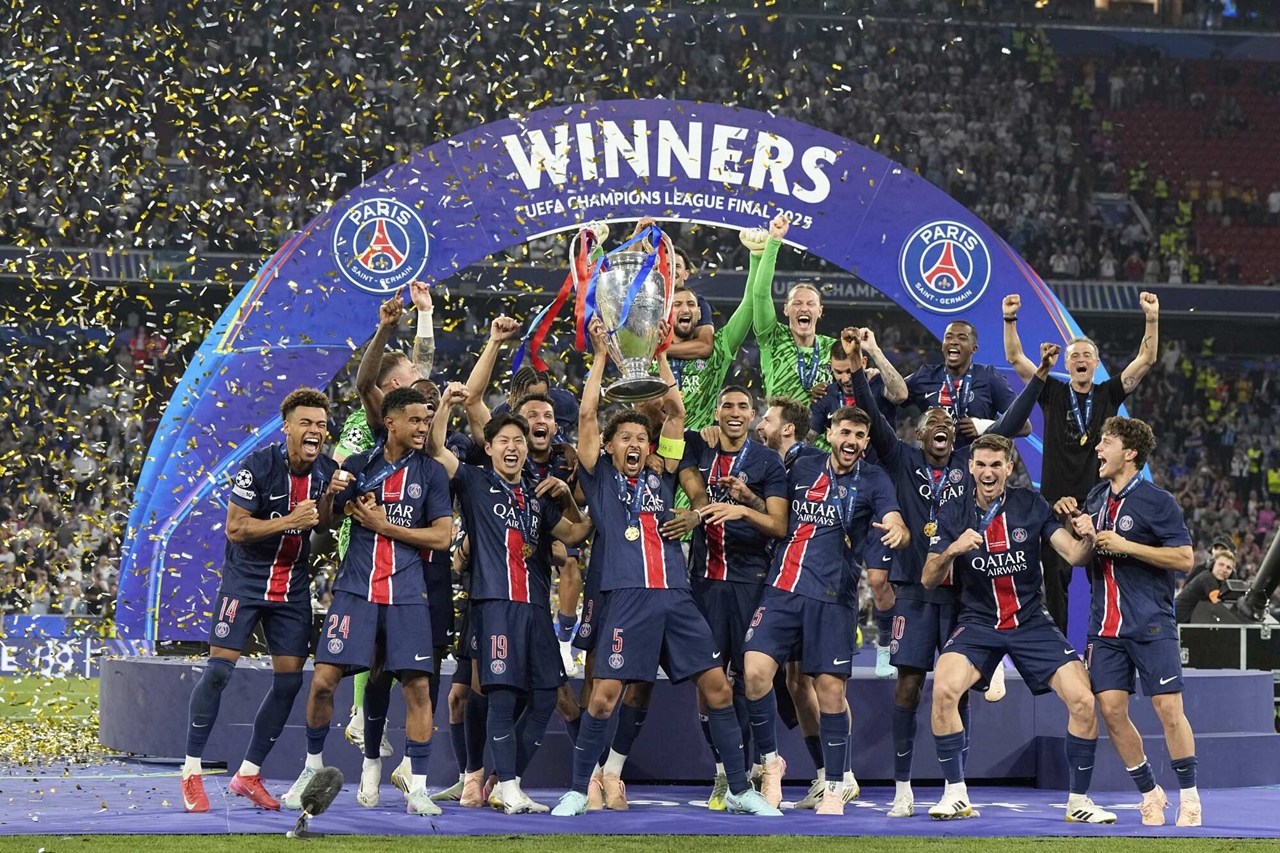
The 2024–25 season was historic, as Paris Saint-Germain defeated Inter Milan 5–0 in the final at Munich’s Allianz Arena—the biggest margin of victory in a Champions League final. PSG also became the first French club since Marseille in 1993 to lift the trophy.
Unforgettable Moments
The Champions League has produced countless moments of drama and glory:
- 1999 Final: Manchester United’s miraculous comeback against Bayern Munich, scoring twice in stoppage time to win 2–1.
- 2005 Final in Istanbul: Liverpool’s legendary comeback from 0–3 down against AC Milan to draw 3–3 and win on penalties.
- Zidane’s Volley (2002): A stunning left-foot strike that sealed Real Madrid’s victory over Bayer Leverkusen.
- PSG’s Treble (2025): Under Luis Enrique, PSG captured the Champions League as part of a continental treble, marking a new era for French football.
Impact and Legacy
Today, the UEFA Champions League is the most-watched club football competition in the world, second only to the FIFA World Cup and UEFA European Championship in terms of global audience. Featuring the likes of Real Madrid, Barcelona, Bayern Munich, Manchester United, and PSG, the tournament is not just a competition but a cultural event.
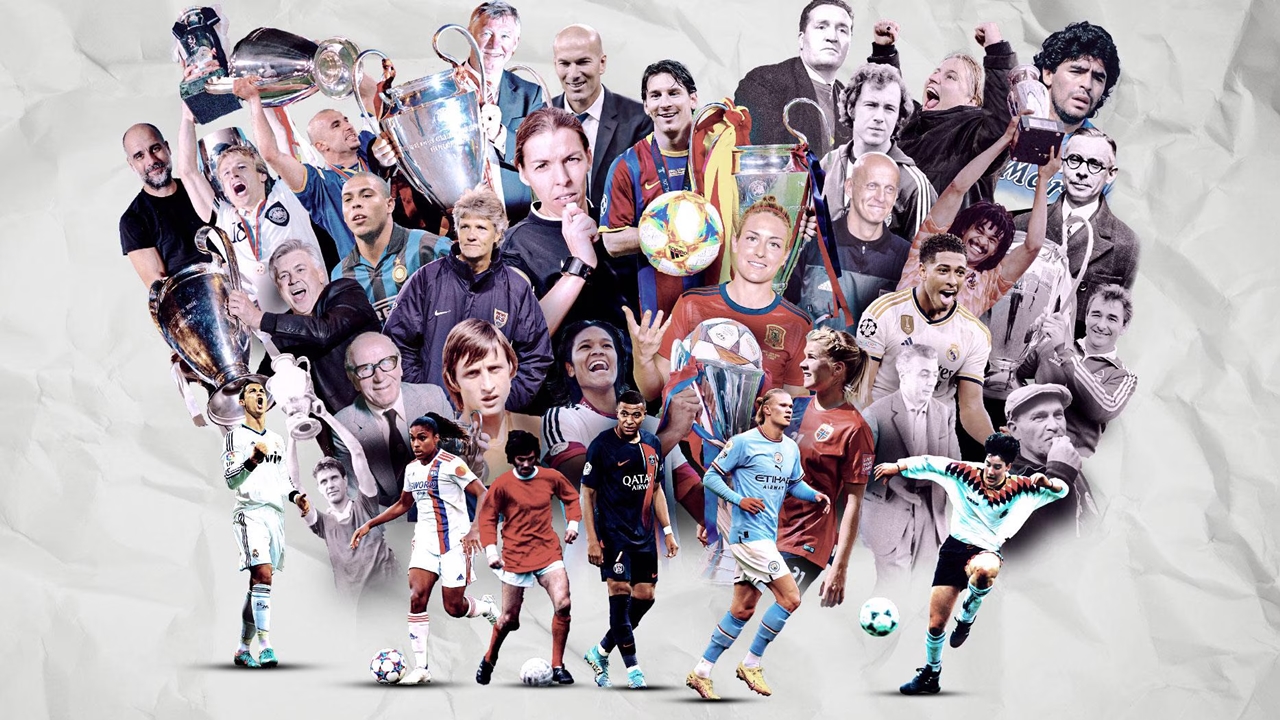
It has been graced by stars like Cristiano Ronaldo (128 goals), Lionel Messi (114 goals), and guided by master coaches such as Carlo Ancelotti and Pep Guardiola.
The Champions League has also offered fairy-tale stories, with underdogs like Porto (2004) and Borussia Dortmund (1997) shocking the footballing world. With the new format and constant evolution, the competition remains the ultimate dream for clubs and players alike—a stage of triumphs, heartbreaks, and timeless football history.